Many people think bad credit means they can’t buy a house — but that’s not always true. A lot of buyers assume their credit is bad without actually checking it. The good news is you can see your official credit reports for free at AnnualCreditReport.com — that’s the only authorized site to get your credit reports from all three major bureaus (Equifax, Experian, and TransUnion). These reports don’t include your credit score, but they let you see exactly what lenders will see so you know what’s on your record and can fix mistakes before you apply for a loan.
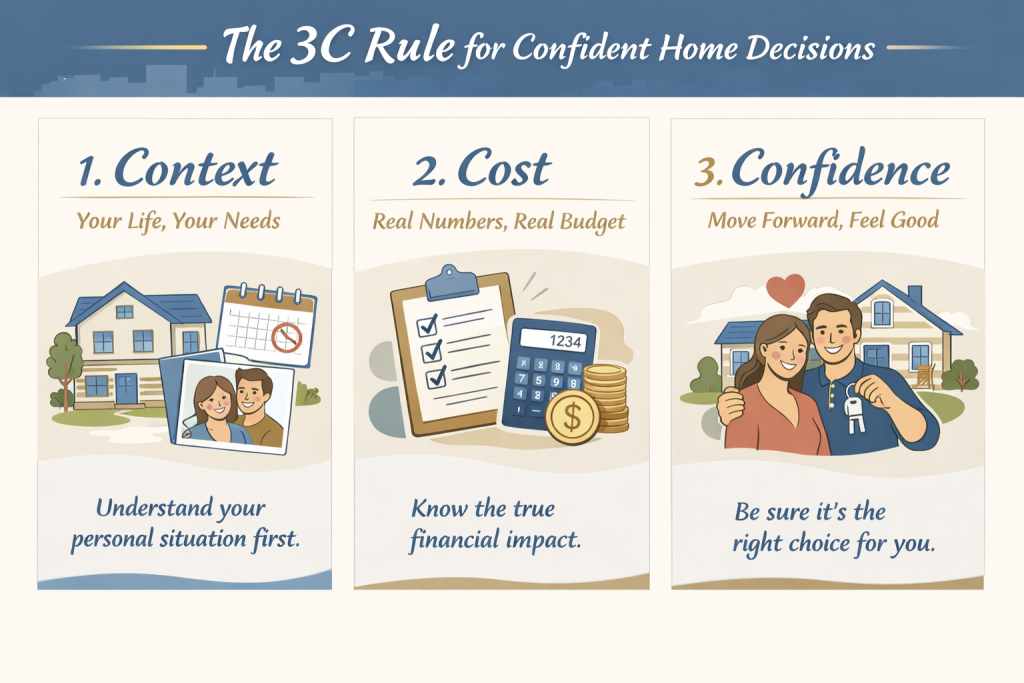
Now let’s talk about cost — credit scores and loan options. Different loans have different credit needs. FHA loans are the most flexible, often allowing scores as low as around 500 with a larger down payment or 580 with a smaller down payment. VA loans don’t set a strict minimum, though many lenders look for around 620. USDA loans also don’t have a hard minimum, but lenders typically look for around 640. Conventional loans usually require at least 620, and higher scores often get better rates and terms. This means “bad credit” isn’t a roadblock — it’s something we can understand and plan around together.
Once you see your real context and understand your true cost, you can build confidence. Don’t let myths stop you from learning where you stand or what steps you can take next. Many buyers improve their credit faster than they expect simply by correcting errors, paying down debt, and understanding how lenders view credit. I’m here to help you figure it out step by step so you can move forward with confidence — not confusion. Ready to take the next step? Contact me today and let’s talk about your goals and how we can make homeownership a reality for you.